Change or rekey · Grimsby
Deadbolt Installation in Grimsby
The back door has a deadbolt in name only: a short bolt, a thin brass strike held by two little screws, and a jamb you can flex with your palm. It was fine for a builder's showing.
Deadbolt Installation
In plain words
Steel-clad and fibreglass doors, the common insulated entry doors in newer subdivisions, take a deadbolt happily as long as they are cut for it properly. The skin is thin metal or resin over a foam core, often with a wood block at lock height, so the cross bore is made with a hole saw suited to the skin, at low speed, and the edge is finished with a plate rather than a chisel mortise. Solid wood doors in older homes are cut conventionally, with care for splitting at the edge. The locksmith reads the door before drilling and picks the method that leaves a clean opening and a true-running bolt.
How the visit goesThe back door has a deadbolt in name only: a short bolt, a thin brass strike held by two little screws, and a jamb you can flex with your palm. It was fine for a builder's showing. It is not fine for a laneway.
Grimsby
How the visit goes
How the door hangs and closes
Before a new bolt goes in, the door has to close properly on its own, so the locksmith swings it a few times and watches. A door that drops on tired hinges, binds against thick weatherstrip or has to be pulled to latch will put a new deadbolt out of line the moment the season changes. Hinge screws are tested for grip, the gap around the door is read for evenness, and the existing latch is checked against its strike. Small corrections here, such as a longer hinge screw into the framing or a trimmed weatherstrip, are made first so the deadbolt can be set to a door that sits square and stays there.
Setting a strike that reaches the framing
A reinforced strike or strike box is centred over the pocket, squared to the edge of the jamb, and its outline is scored and chiselled to a depth that leaves the plate flush. Pilot holes are drilled, and the two holes nearest the door stop take 75 mm screws that pass through the jamb and the shim space into the stud behind, with shorter screws in the remaining holes. The long screws are driven by hand for the last turns so the heads seat without crushing the jamb. Where the jamb is thin or has been split by an earlier attempt, a full-length jamb reinforcer is fitted under the strike instead.
A bolt with a full, deadlocked throw
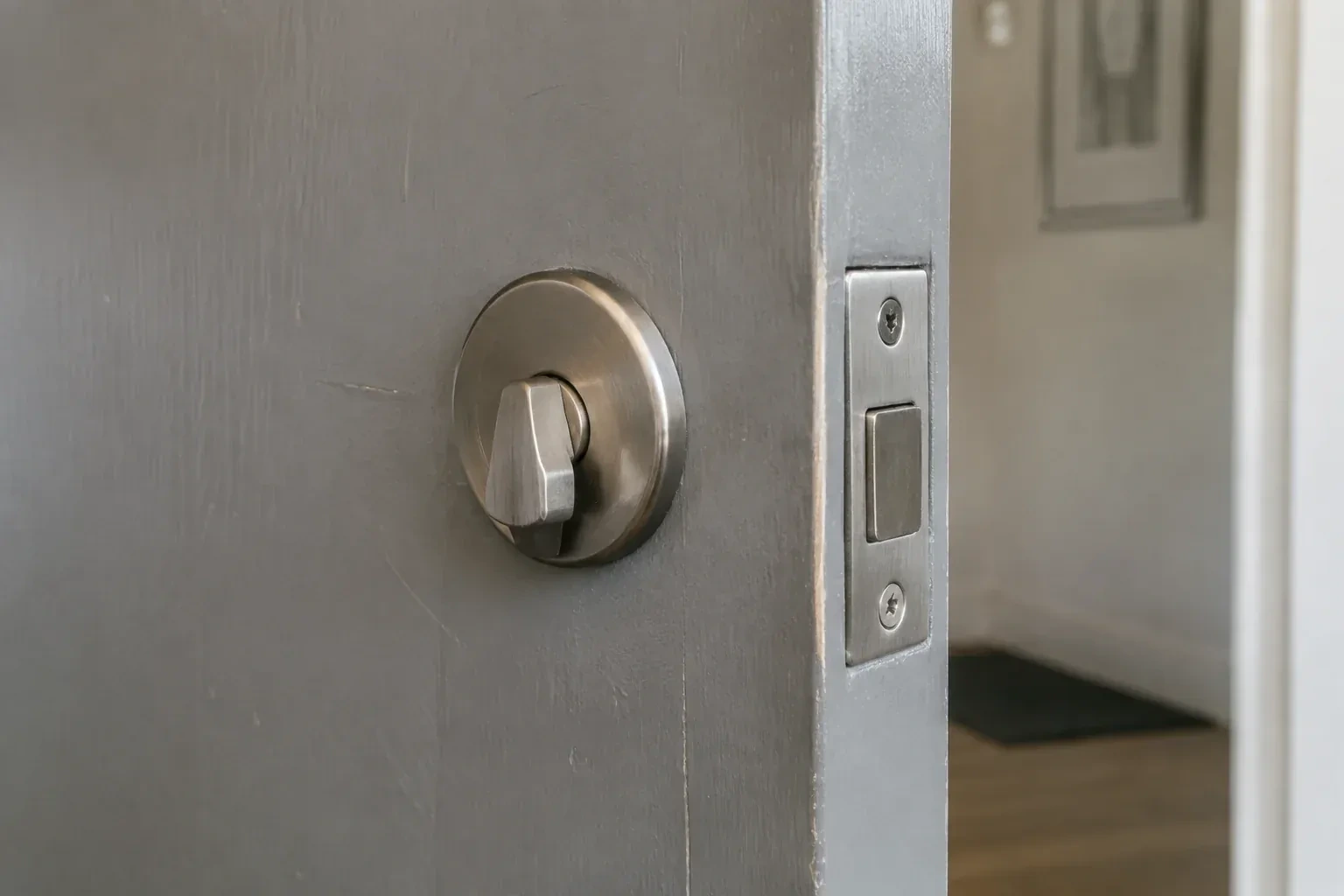
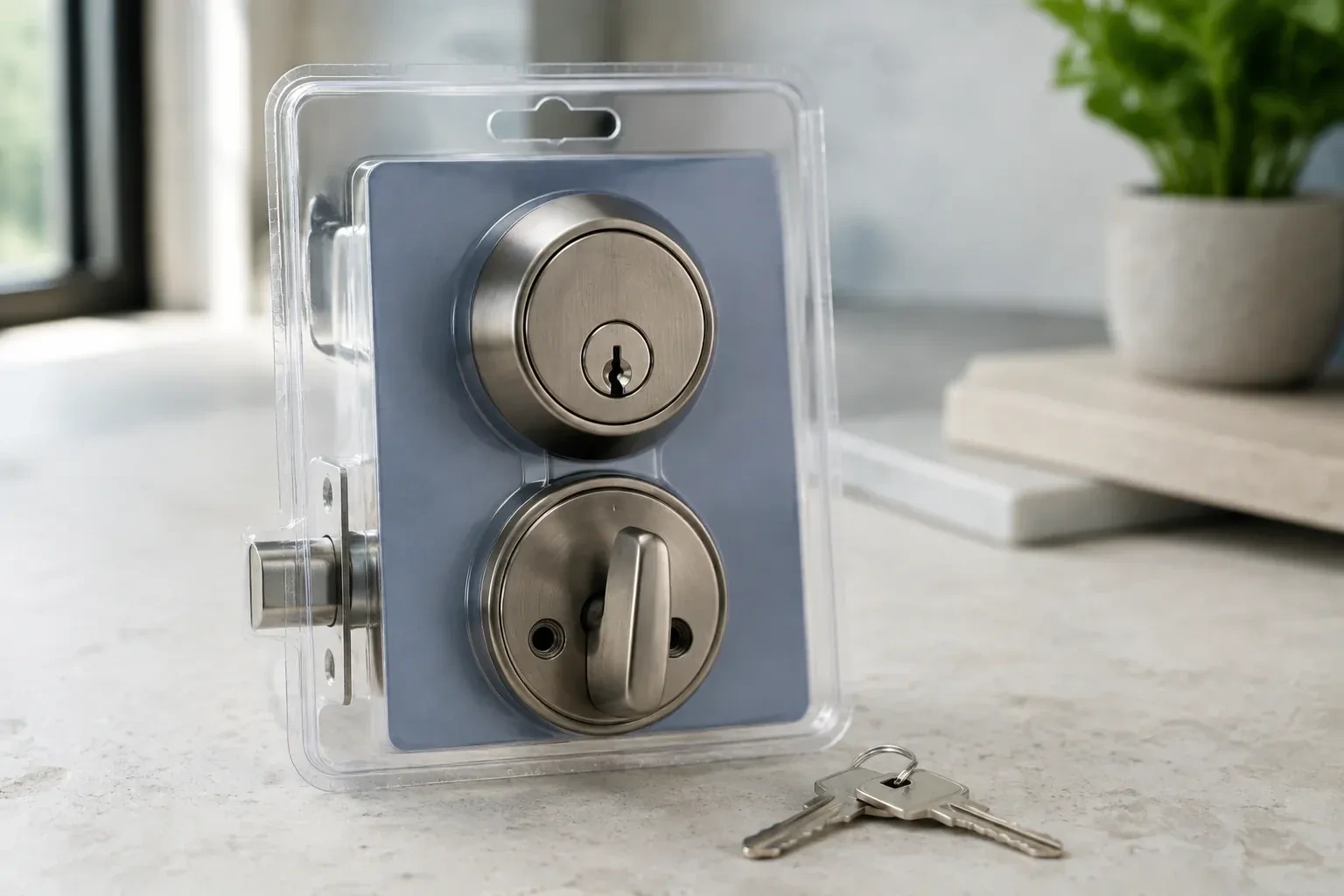
What you feel at the end is a bolt that travels its whole length into the frame with one turn and stops with a definite click, which is the deadlocking position that stops the bolt being pushed back from the edge. From outside, the key turns a cylinder that sits in a collar which spins if gripped. From inside, the thumb-turn moves the same bolt without a key. The locksmith shows you both, throws the bolt with the door closed so you hear it seat, and hands over the packaging with the model, finish and backset written on it for the day a matching lock is wanted on another door.
Deadbolt Installation
In the van
- 75 mm (3 in) strike screws
- Rekeying pins and key blanks
- Sharp chisel and mallet
- Manufacturer's bore template
- Boring jig and 54 mm hole saw
What affects the quote
Same fees day, night or weekend
1Door and hinge corrections
A sagging door, loose hinge screws or thick weatherstrip are put right before a bolt is fitted, and that adjustment is quoted as its own line rather than folded into the lock.
2Non-standard bore or backset
Older doors with a small cross bore, an unusual backset or a mortise lock case need adapting or filling before a modern deadbolt fits, and that preparation is quoted before work begins.
3Keying alike or a fresh key
Pinning the new cylinder to your existing key, or setting several doors to a new key, is bench work quoted per cylinder, plus the number of keys you ask to have cut.
Deadbolt Installation: questions
How long does a deadbolt installation take?
A replacement into existing holes is generally the shorter visit, and boring a fresh door with a new strike takes longer, roughly an hour or two per door including the frame work and testing. Steel doors, keying alike, frame repairs after a forced entry and fitting a jamb reinforcer each add time. The locksmith can give a realistic estimate once the door and frame have been looked at.
How long should the bolt be?
The bolt should extend at least 25 mm into the frame, which is the standard throw for a dwelling's entrance doors and the length most residential deadbolts provide. Part of the bolt stays inside the door for support while the rest sits in the pocket. A hardened steel insert that spins under a saw blade is a common feature worth having on doors that face a street or laneway.
What do backset and bore mean, and why does the locksmith ask?
Two measurements decide whether a deadbolt fits your door. Bore is the diameter of the big hole through the face, 54 mm on most current hardware. Backset is how far the centre of that hole sits from the door's edge, 60 mm or 70 mm on nearly all residential doors. A replacement must match both to use the existing holes, and a fresh installation is cut to match the knob below, so knowing them ahead puts the right hardware on the van.
Change or Rekey Locks
- Lock Replacement & UpgradeThe keys the seller handed over came in a sandwich bag: six unlabelled copies for two locks of…
- Vintage Mortise Lock ServiceThe old skeleton key still fits the keyhole, but it now needs a jiggle, a lean on the door and a…
- Smart Lock InstallationThe rental turns over every few months and each time you drive across town to swap keys, then…
Deadbolt Installation near you
Residents and business owners in Grimsby can use this list to find the service that fits, then read what it involves before anyone comes out. Emergency openings are here. So are rekeys, lock changes, deadbolt and high-security upgrades, commercial door hardware, master keys, safes and key cutting.