Change or rekey · West Lincoln
Vintage Mortise Lock Service in West Lincoln
The old skeleton key still fits the keyhole, but it now needs a jiggle, a lean on the door and a little luck before the bolt moves. Last week it took three tries.
Vintage Mortise Lock Service
In plain words
Interior doors are as much a part of this work as the entry. Bedroom, bathroom and closet doors in an older home usually carry a lighter mortise latch with a privacy turn button, and after decades without lubrication they stop catching or the turn button seizes. These small cases are short jobs on the bench: a clean, a spring, a new turn button spindle where the old one has sheared. Sets of interior locks are often serviced in one visit, and a bit key can be cut that operates all of them, which is how they were originally supplied when the house was built.
How the visit goesThe interior bedroom doors on the second floor have the original mortise latches, and none of them close any more. The doors drift open, the small brass turn buttons do nothing, and the keyholes have been empty for as long as anyone can remember.
West Lincoln
How the visit goes
Bit key or cylinder
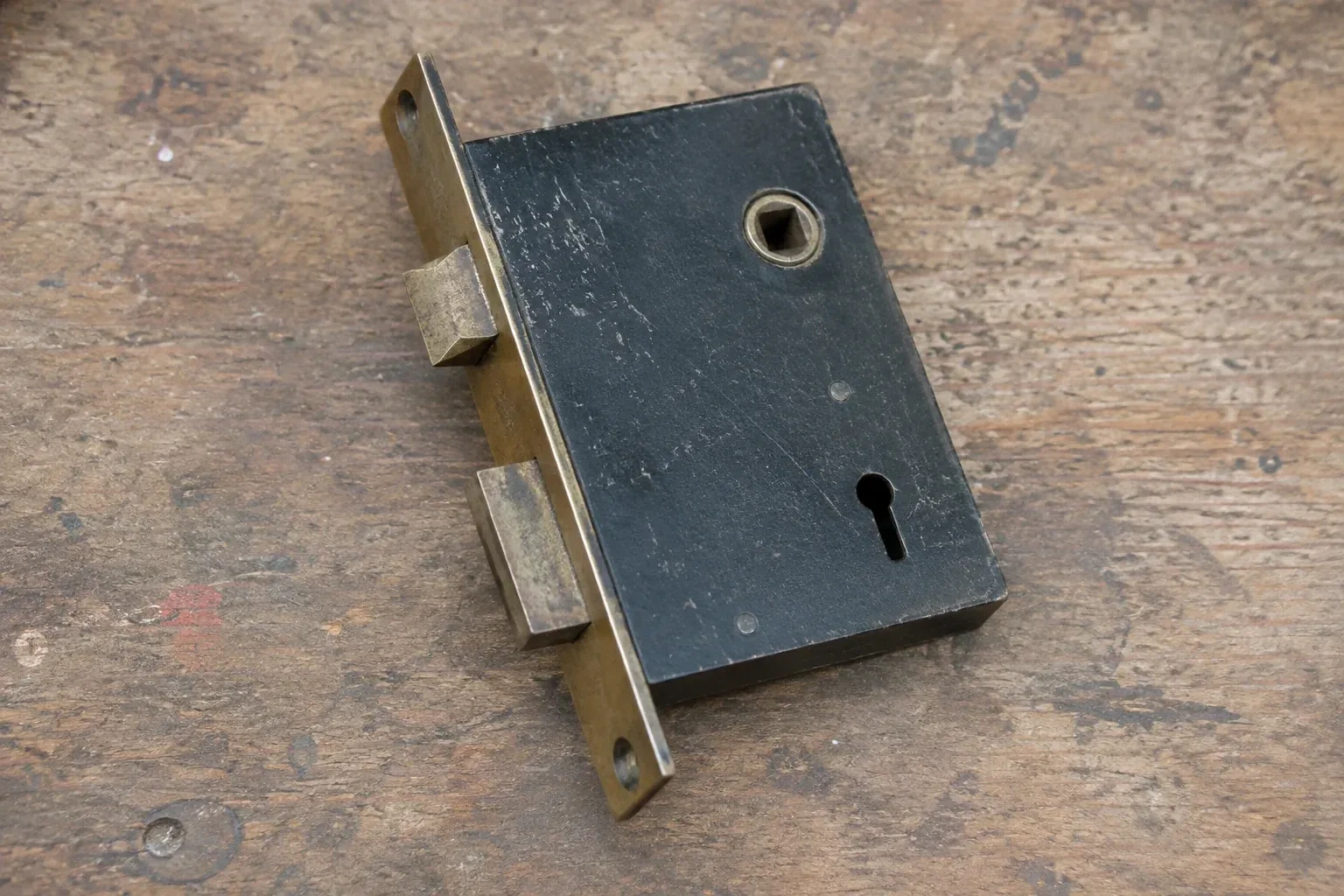
Older mortise locks come in two families, and the check sorts out which one is on the door. A keyhole shaped like a small keyhole silhouette takes a bit key, the skeleton key style, and the case works on wards and levers that the key's bit must match. A round face on the door with a slot for a flat key is a pin-tumbler cylinder threaded into the case. The distinction matters for everything that follows: how a lost key is replaced, whether the lock can be rekeyed, and what to do if the mechanism is worn out. It also settles whether a spare can be filed on the bench or cut on a key machine.
When a case is fitted new
If the old case could not be saved, the replacement is fitted to the door rather than the door to the replacement. A reproduction or modern mortise case matching the measured height, depth, backset, faceplate and hub is chosen with the goal of it dropping into the existing pocket; where a small difference remains, the pocket is trimmed with a chisel by the least amount that works, never bored out. The original knobs, escutcheons and strike are refitted wherever their spacing allows, and a new cylinder is keyed to match the rest of the house if wanted. The result reads as the original lock from either side of the door, with the reliability of a fresh mechanism.
Keys that fit the lock, and a spare
You are handed keys made to the restored lock, counted into your hand, and each one is tried in the door before the locksmith drives away. For a bit-key lock that means keys filed to your case; copying one needs the right blanks and equipment, which most hardware counters do not stock, so the locksmith keeps the record needed to make more. For a cylinder lock it means keys cut to the new combination, with any old keys now useless. Keep one spare somewhere other than the door, ideally with a neighbour or in a lockbox, and treat bit keys gently: they bend in a pocket and a bent key is how most of these locks become stiff again.
Vintage Mortise Lock Service
In the van
- Reproduction mortise case
- Mortise cylinder and cam
- Cylinder set screw
- Latch and hub springs
- Hardwood dowel and wood glue
What affects the quote
Same fees day, night or weekend
1What is actually broken inside
A clean and new springs is the lightest job. A worn hub, a cracked lever or a part that has to be fabricated to match the original adds bench time, and the assessment names which applies before any of it starts.
2Keying doors alike
Bringing several interior locks onto one bit key, or several cylinders onto one flat key, is extra bench work per lock and is simplest to arrange while all the cases are out on the same visit.
3Travel and access
Distance to the property and how easy it is to work at the door, on a busy entry or a third-floor walk-up, are part of any call-out and are stated when the visit is booked.
Vintage Mortise Lock Service: questions
How should I look after the lock once it is serviced?
A drop of the right lock oil into the latch and bolt once a year is plenty. If the lock has a pin-tumbler cylinder, use whatever lubricant that cylinder's maker specifies, since some take a dry graphite or PTFE product and others a specified liquid one. Try the latch and deadbolt each spring and fall; if the bolt starts to scrape, the strike wants a small adjustment before anything is strained. Keep bit keys out of a pocket where they bend.
Why does the deadbolt scrape or need a shove to throw?
Two causes cover most cases. Either paint has built up on the faceplate, the bolt or the strike so the bolt drags across it, or the door has dropped so the bolt is entering the strike pocket at an angle and rubbing its edge. Occasionally a bent deadbolt lever inside the case adds friction. Cleaning the paint back, adjusting the strike and checking the lever all happen as part of the service.
Can the lock be made more secure while keeping it original?
Yes, within reason. A later mortise case can take a modern high-security cylinder of the right thread and cam, chosen for its pick resistance; stopping casual key copying is a separate question, answered by fitting a restricted or patented key system alongside it. Longer screws into the strike and a properly seated deadbolt add more than most people expect. For a bit-key lock, the practical gains are a full-throw deadbolt and a good strike; if more is wanted, a separate modern deadbolt above it leaves the original lock untouched.
Change or Rekey Locks
- Deadbolt InstallationThe back door has a deadbolt in name only: a short bolt, a thin brass strike held by two little…
- Lock Replacement & UpgradeThe keys the seller handed over came in a sandwich bag: six unlabelled copies for two locks of…
- Smart Lock InstallationThe rental turns over every few months and each time you drive across town to swap keys, then…
Vintage Mortise Lock Service near you
The lock services offered in West Lincoln are grouped the way a door is used. Getting back in when you are locked out. Deciding who holds a working key. Upgrading the hardware so the door resists more than a casual try. Keeping commercial entrances working. Opening and maintaining safes. Each is described below.