Change or rekey · West Lincoln
Smart Lock Installation in West Lincoln
The rental turns over every few months and each time you drive across town to swap keys, then wonder whether copies were made. A lock with codes you can set and erase from your phone would end that cycle.
Smart Lock Installation
In plain words
A smart lock fitted by a locksmith keeps a way in that works when the battery or network fails, a mechanical key on many models or an external battery contact on key-free ones. Most keypad deadbolts keep a conventional keyway, rekeyed during the visit so a fresh key operates it and the old one retires. Some models instead add small outside terminals where a nine-volt battery can wake a dead lock long enough to enter a code. The technician tests whichever route the model provides, shows the low-battery warning, and explains what the lock does if the internet goes quiet.
How the visit goesHalf the evenings someone asks whether the back door got locked, and nobody is sure. A lock that relocks on its own, shows its state in an app and reports when it was last opened would settle the question.
West Lincoln
How the visit goes
The other doors and the keys that stay
A smart lock rarely arrives alone; the back door, the garage entry and the side door still have keys, and the plan should include them. The locksmith asks which doors should share the new arrangement, whether the remaining mechanical locks share a keyway compatible with the smart lock's override so they can be rekeyed to one key, and where that key will live once the family stops carrying keys daily. If the household is dropping keys altogether, a lockbox for the override key or a second keypad becomes part of the conversation. Sorting this out at the start means the whole house ends up on one coherent system rather than a smart front door and a drawer of mismatched keys.
Fitting the bolt, the body and the strike
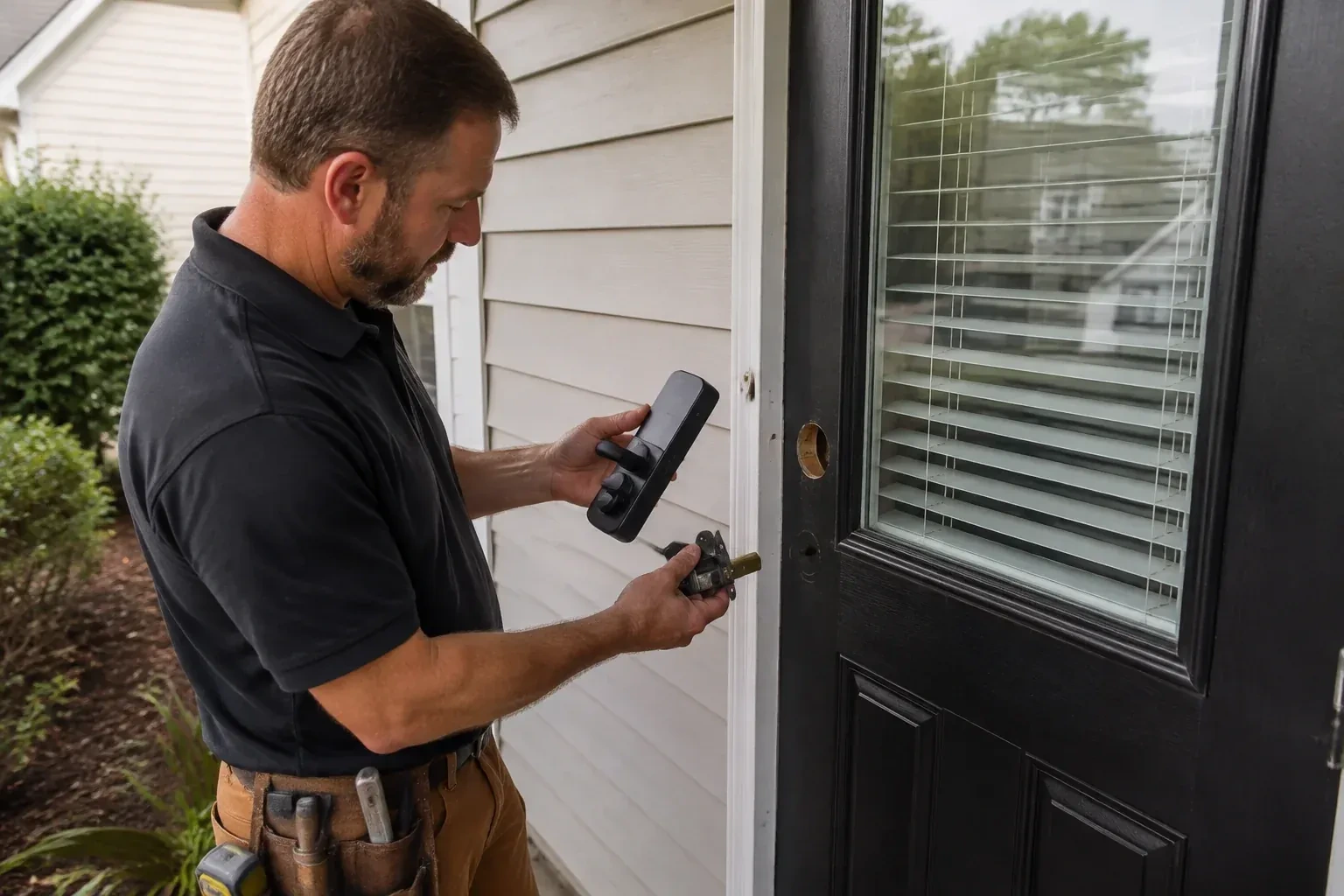
With the door ready, the mechanical parts go in first. The new bolt is set to the door's backset and slid into the edge bore with its face plate flush. The outside assembly, keypad or touch surface, is placed with its cable fed through the cross bore, and the inside mounting plate is fixed so the two halves clamp the door without twisting. Screws are driven by hand rather than with an impact driver, because an over-tightened housing binds the motor. The interior unit is seated on the plate and the tailpiece aligned so the thumb-turn and the motor share the same travel. A reinforced strike with long screws replaces the light original.
Batteries, warnings and the cold months
A smart lock runs on batteries, and you leave knowing how that side of it behaves. The locksmith shows where the low-battery warning appears on the lock and in the app, how to swap the set, and which type to buy so the motor gets steady power. Cold shortens battery life, so a fresh set before the first hard frost is a sensible habit, and the alert should go to a phone someone actually reads. If the model has an external emergency power contact, you will have seen it used and know where a nine-volt battery lives for the day it is needed.
Smart Lock Installation
In the van
- Thick-door extension kit
- Wi-Fi bridge or home hub
- Door-position sensor magnet
- Manufacturer-specified batteries
- Hand screwdrivers, Phillips and Torx
What affects the quote
Same fees day, night or weekend
1Number of doors
A single front door is the base case. Adding the back door, the garage entry or a side door, whether each gets its own smart lock or is rekeyed to match the override key, extends the visit accordingly.
2Supplying the lock yourself
If you have already bought a lock, the quote covers fitting and setup only, with a note on whether the chosen model suits your door; if the locksmith supplies it, the hardware is listed alongside.
3Removing an old mortise or non-standard lock
Older doors sometimes carry a mortise case or a lock with an unusual footprint. Filling the pocket, plugging holes and re-drilling to the standard preparation is careful joinery, and it is quoted as preparation.
Smart Lock Installation: questions
Is a smart lock as secure as a regular deadbolt?
The part that resists force is the same: a steel bolt, a solid strike with long screws and a door that closes true. Smart deadbolts meet the same residential hardware standards as mechanical ones, and a reinforced strike goes in regardless of which you choose. Where a smart lock adds is on the human side: codes that can be revoked and a door that locks itself, plus, on a key-free model, no keys to copy or lose. Good habits, such as unique codes and updates, keep the electronic side tidy.
Does the lock still work if the internet goes down?
Yes for the things that matter at the door. Codes, fobs, fingerprints and the key talk to the lock directly, and schedules stored in the lock carry on, so you get in and out normally through a router reboot or an outage. What pauses is remote control from far away and the alerts, which return when the connection does. The locksmith will name exactly which features on your model need the network so there are no surprises.
Fingerprint, fob, code or phone: which is worth having?
It depends on who uses the door. Codes suit everyone and need nothing in hand. Fobs or cards are a favourite for children and for anyone who finds small buttons difficult, since a tap does it. Fingerprint readers are convenient for a household of adults but can be fussy with cold, wet or gloved hands in winter, so pair them with a code. Phone control is for whoever wants alerts and remote checks. Most families end up using two of these.
Change or Rekey Locks
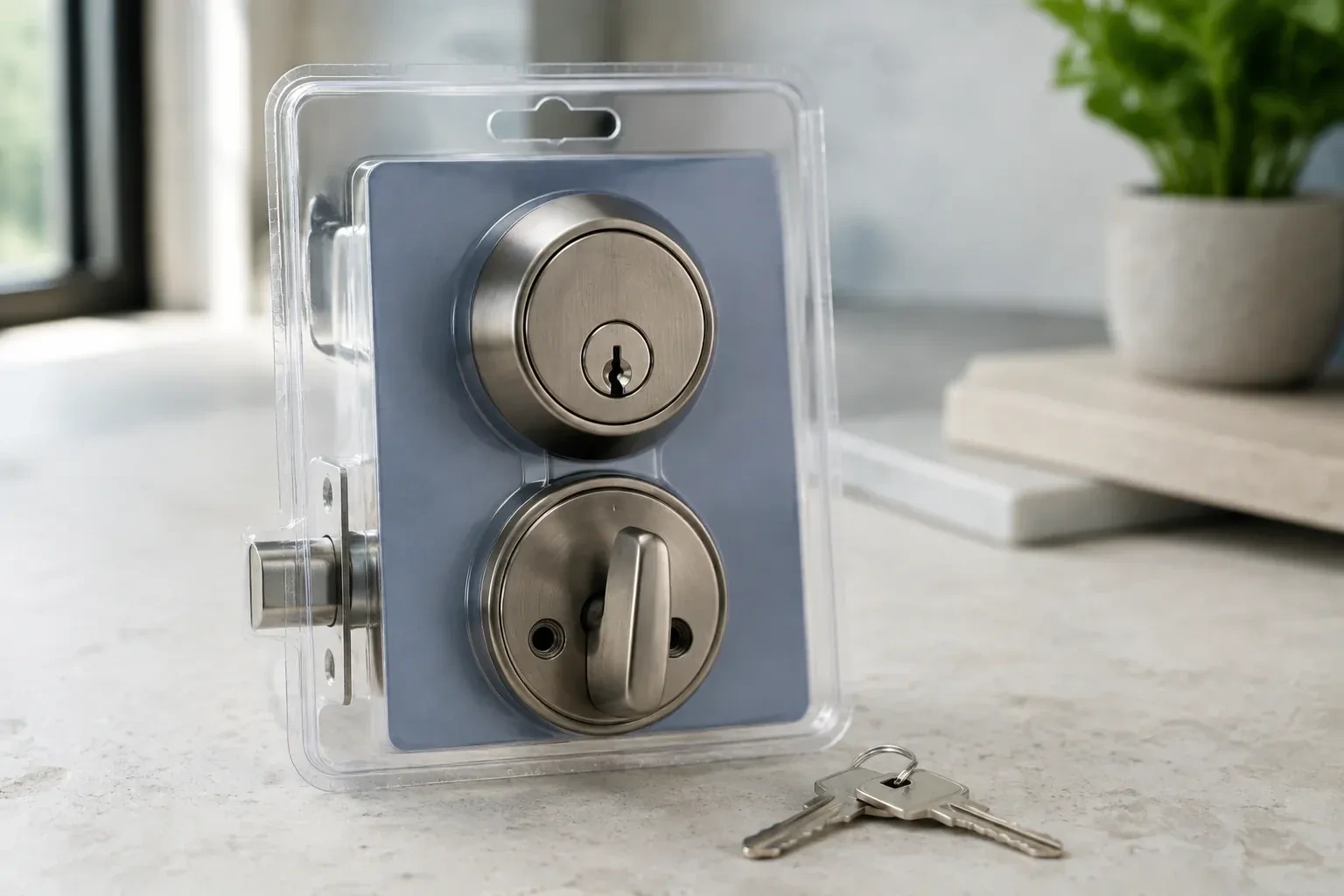
- Deadbolt InstallationThe back door has a deadbolt in name only: a short bolt, a thin brass strike held by two little…
- Lock Replacement & UpgradeThe keys the seller handed over came in a sandwich bag: six unlabelled copies for two locks of…
- Vintage Mortise Lock ServiceThe old skeleton key still fits the keyhole, but it now needs a jiggle, a lean on the door and a…
Smart Lock Installation near you
The lock services offered in West Lincoln are grouped the way a door is used. Getting back in when you are locked out. Deciding who holds a working key. Upgrading the hardware so the door resists more than a casual try. Keeping commercial entrances working. Opening and maintaining safes. Each is described below.